
Patient Education
Understanding Your Periodontal Health
Dr. Richardson and our team strive to improve your health by helping you understand the conditions we treat and the care you'll receive. All content on this site was written by Dr. Richardson and reflects current published scientific methodology.
Patient Education
Understanding Your Periodontal Health
Dr. Richardson and our team strive to improve your health by helping you understand the conditions we treat and the care you'll receive. All content on this site was written by Dr. Richardson and reflects current published scientific methodology.
Specialty Dentistry
What is a Periodontist?
A periodontist is a dental specialist who attended 4 years of dental school, is licensed to practice general dentistry, and has completed an additional 3-year residency intensely focused on surgical treatment of the gums and bone that support the teeth.
Periodontics is one of the nine specialties recognized by the American Dental Association. In addition to treating periodontal disease, periodontists are uniquely trained to place dental implants and work with the soft tissues that protect them. Training also includes advanced bone grafting, sinus augmentation, soft tissue grafting, and IV conscious sedation.
Getting Referred to Our Office
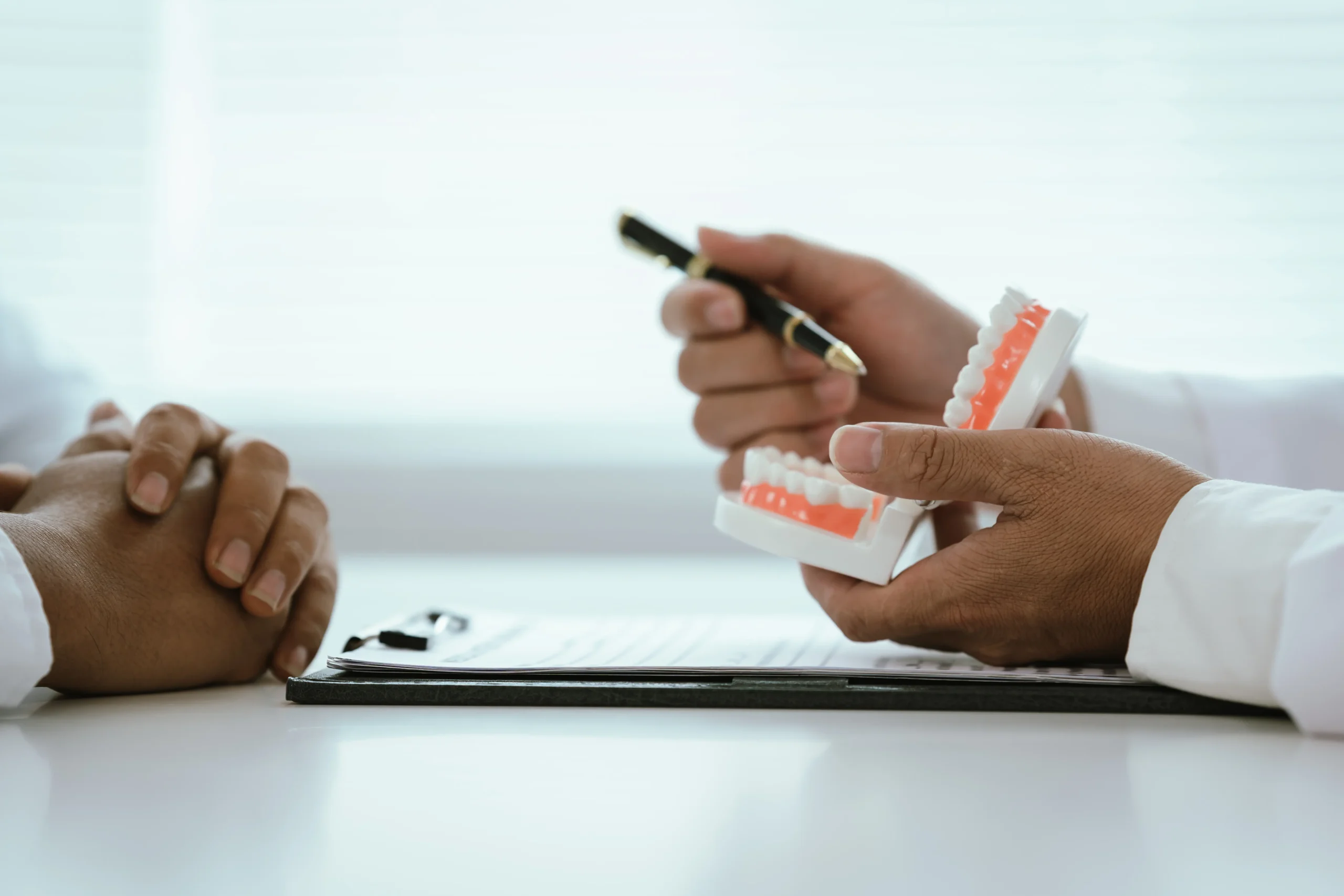
A referral will entail a comprehensive dental examination, review of x-rays, and an in-depth consultation with Dr. Richardson that will educate you on the specifics of your condition. You will leave with an understanding of why you were referred, treatment options tht suit your needs, and a treatment plan with clear goals.
Request a Consultation →
Getting Started with Richardson Periodontics?
Please click on the link below and complete the forms prior to your first appointment.
Conditions We Treat
Common Conditions We Treat
Periodontal Disease
Gum / Periodontal Disease
Periodontal disease ranges from simple gum inflammation to serious disease causing major damage to the soft tissue and bone supporting the teeth. It is an inflammatory condition driven by bacterial toxins that trigger bone loss around the roots of the teeth — detectable as a "pocket." Severity depends on oral hygiene, genetics, smoking, and diabetes. The most notable symptom is a lack of symptoms — the vast majority of patients have no discomfort until the disease is advanced.
View Treatment Options →
Gum Recession
Receding Gums
Gum recession develops gradually and often goes unnoticed until a secondary problem occurs: sensitive teeth as more dentinal tubules are exposed, teeth that appear longer, a notch at the gum line, or larger-appearing spaces between teeth. Without intervention, recession can lead to root decay and eventual tooth loss. Treatment is soft tissue grafting, which can reverse the damage and restore the protective gingival band.
View Treatment Options →
Dentures
Denture Stabilization
Dental implant therapy is one of the most significant advances in dentistry, primarily because it gives denture wearers a second chance! Denture wearers, both new and experienced, know that the lower denture presents the biggest challenge when adjusting to dentures. It can be frustrating trying to eat certain foods or speaking with confidence when your lower denture begins to float in your mouth. The solution is to keep the denture in place by using implants.
View Treatment Options →
Peri-Implantitis
Implant Complications
Dental implants have an excellent long-term success rate, but complications can occur — and when they do, early intervention matters. The most common is peri-implantitis, an inflammatory condition caused by bacteria accumulating around the implant that mirrors periodontal disease in natural teeth. Left untreated, it leads to progressive bone loss and implant failure. Risk factors include a history of periodontal disease, smoking, diabetes, and poor oral hygiene. Treatment ranges from non-surgical debridement to surgical bone regeneration depending on severity.
View Treatment Options →
FAQ
Frequently Asked Questions
Understanding your condition is the first step toward better outcomes. Dr. Richardson has personally answered each of these questions based on what he hears most often from his patients.
Who is a periodontist?
A periodontist is a dental specialist trained and experienced to diagnose, treat, and prevent different forms of periodontal disease. They are also specifically trained to place dental implants, perform bone grafting, and administer IV conscious sedation — skills beyond the scope of general dentistry.
Am I at risk for periodontal disease?
You may be at risk if you smoke or use tobacco products; do not brush and floss regularly; have health conditions such as diabetes, heart disease, or osteoporosis; or have family members who have had gum disease, as it can be genetic in some cases. If you are experiencing any symptoms, schedule an appointment with your dentist to determine if treatment is necessary.
Will my insurance cover periodontal treatment?
Many insurance plans provide assistance for periodontal treatment. Our practice will help you work with your insurance provider to maximize your benefits before any treatment begins. We work with CareCredit to assist with financing. We also provide a pre-treatment cost estimate as a courtesy so there are no surprises.
Why should a periodontist place my dental implants?
The success of dental implants depends on three factors: the skill of the operator, the quantity and quality of bone at the site, and the periodontal health of the patient. A periodontist can eliminate any gum disease or infection prior to placing implants, has specific training for implant placement, and in some cases can coordinate the restoration as well — providing a more seamless experience.
Why doesn't gum disease hurt?
In gum disease, soft tissues are inflamed and bone is lost around the teeth — but the causative bacteria accumulate gradually over time. In early stages, teeth may bleed but not cause pain. Pain indicates a more advanced stage, often accompanied by significant bone loss. Absence of pain does not mean absence of diease — your general dentist is required by Florida Statutes to screen you for periodontal disease at every visit.
After Your Procedure
Post-Operative Instructions
After a surgical procedure, the following experiences are common and expected:
• Soreness or pain in the surgical area or jaw joint on either side of the mouth
• Swelling and/or bruising
• Mild bleeding from the surgical site
Ice
Place an ice pack on the outside of the face for 20 minutes and then take it off for 20 minutes. Do this as much as possible during the first 48 hours after prodedure.
Bleeding
It is normal to have some oozing from the surgical area after the procedure for up to 24 hours. If bleeding persists, place steady pressure on the site with gauze or a damp paper towel for 20-30 minutes.
Pain
Take the prescriptions Dr. Richardson provided as directed. In addition to the prescription, Advil/Ibuprofen is recommended if you are able to take it. The recommended dose is to take 800mg three times a day. The Advil/Ibuprofen is an anti-inflammatory and should be taken to reduce the swelling and bruising even if only mild discomfort occurs.
Activity
Stay as inactive as possible the day of and the day after surgery. Staying inactive helps prevent a rise in blood pressure reducing bleeding risk.
Eating & Drinking
It is important to stay hydrated, non-carbonated beverages such as water or sports drinks are ideal. Soft food should be eaten for the first several days following surgery on the opposite side of the mouth if possible.
Rinsing
Do not rinse with anything the day of surgery. The day after, gently rinse with the provided rinse — do not swish and spit vigorously. Warm salt water will also aid in healing. Do not use any over the counter rinses.
Brushing
The day after the procedure, you may brush gently while avoiding the surgical area.
Sutures/Dressing
In some cases surgical dressing is applied and this can break off. If this occurs simply throw it away and do not try to replace it. Sutures may become loose after a couple of days - this is normal.
!
The best rule is to leave the surgical site alone as much as possible — it will heal better. Please do not try to examine or brush it, as this can be detrimental to the healing. If any concerns arise, call Dr. Richardson at the office during normal hours or after hours on his cell phone at (352) 514-7168.